STOPS Tactical Field Training Officer, Hamilton County Sheriff -FTO2026-01

From October 26, 2026 08:00 until October 28, 2026 16:00
At Noblesville, IN (STOPS Course Location) Hamilton County Sheriff's Office
info@protraininc.com
302-725-7497 or 574-310-1277
http://protraininc.com/contact
About this course
"The true measure of a Field Training Officer is not just surviving the shift, but ensuring the recruit behind them does the same. Your safety and theirs are inextricably linked." — Nicole Hantz
Course Overview

STOPS Tactical Field Training Officer certification course (3 Days). This advanced-level class will be mentally and physically challenging, requiring Strategies & Tactics of Patrol Stops Field Training Officer candidates to multitask while prioritizing the survival tactics of both themselves and their probationary officers.
What will the student learn?
Be aware of the environment and bystanders, including considerations of terrain and escape routes, while controlling the space around you.
-
Learn strategies for escaping from ambush positions individually and with multiple officers.
-
Understand how to differentiate between a low-risk and an unknown-risk traffic stop.
-
Know the proper placement of violators and backup units during stops.
-
Familiarize the students with case laws relevant to police traffic stops and 4th Amendment seizures.
What will the STOPS Instructor be required to do?
-
Apply the tactics learned during STOPS certification to make effective decisions about tactics used while deploying from the patrol vehicle, individually and with multiple officers.
-
Evaluate and adjust strategies for responding to a variety of calls for service with different threat assessments.
-
Develop the ability to confront single and multiple opponents in realistic scenarios using force-on-force training weapons.
-
Maintain control during traffic stops while managing distractions from bystanders who may attempt to record or interfere.
-
Consider multiple threats simultaneously and make split-second decisions that adhere to the Graham Standard of objectively reasonable force. This training method enhances the dynamic nature of real-world, high-stress situations.
-
Examine personal mindsets to identify areas of hesitation, both physical and psychological, in high-stress scenarios, and to navigate and supervise trainees during these situations. *
-
Successfully address threats, gain compliance or control, and maintain situational awareness and mental clarity throughout practical exams.
-
This course is designed as a hands-on outdoor activity to keep students engaged and interested in learning concepts that will help them quickly identify criminal activity and prepare for possible lethal-force encounters.
Course Breakdown
Train Hard * Train to Win
 Course Intensity
This course is advanced and will challenge students to consider their personal, physical, and psychological vulnerabilities and to adapt to overcome any adversity or threats they encounter.
 Physically Demanding
STOPS Field Training Officer will challenge the students physically during practical exercises and mentally during classroom exercises.
 Mentally Challenging
This course will push students to engage both physically and mentally in challenging scenarios, with officer safety being the priority for both the Field Training Officer and Probationary Officer.
 Core Building
The students will be required to conduct a rigorous self-assessment to identify personal lapses in officer safety and individual physical limitations. By acknowledging these vulnerabilities, the FTO candidate will implement proven techniques to bridge those gaps—ensuring that their tactical evolution directly translates to the safety and success of the probationary officer under their watch.
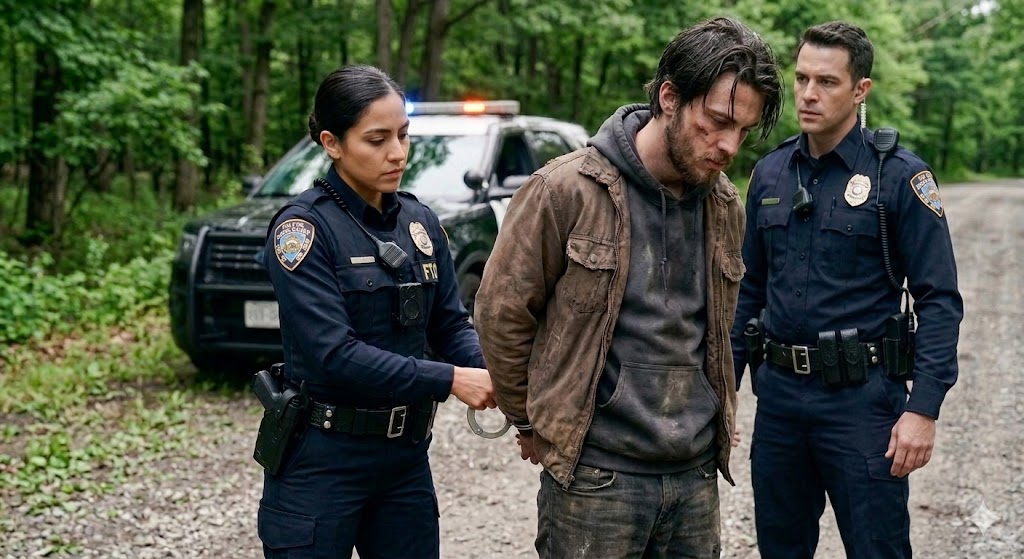
 Student Take Away
-
A greater understanding of strategies and tactics to counter ambushes and planned assaults while deploying from the patrol vehicle.
-
Identified core techniques to identify, improve, and master their tactical skills, leaving them prepared for victory as better, more self-aware officers.
-
Proven training that imparts very tactical mindsets and movements into a student-level course for successfully applying these strategies to real-world police encounters.
Course Accreditation/Certification/Completion
- Upon successful completion of Days 1 and 2, STOPS Field Training Officers will attain certification in the Basic STOPS course.
- Day 3 will be STOPS Field Training Officer training, covering both classroom instruction and practical exercises.
 Course Hours
- (3 days) - 21 hours of training.
- No recertification is required.
Required Course Equipment
-
Attending students will need to be enrolled individually and online. The student must provide proof of employment by credentials, work-verified email, or authorization from their agency’s training coordinator. All students must be on dutyand not forced to attend the training course. Students will be required to complete several liability waivers.
Students are required to bring the following equipment with them to class:
-
Department-issued or approved bulletproof vest that is valid.
-
OSHA approved eye and ear protection.
-
Duty positioning of their weapon (full belt or side holster) as worn daily.
-
No live weapons, chemical agents, or intermediate weapons are allowed in the training area before inspection and cleared by the range safety instructor. .
-
**No live weapons, chemical agents, or intermediate weapons are allowed in the training area **